Valentino Ivan Wilson
Quantifying Forearm Pronation/Supination Using IMU Sensors
Project Description:
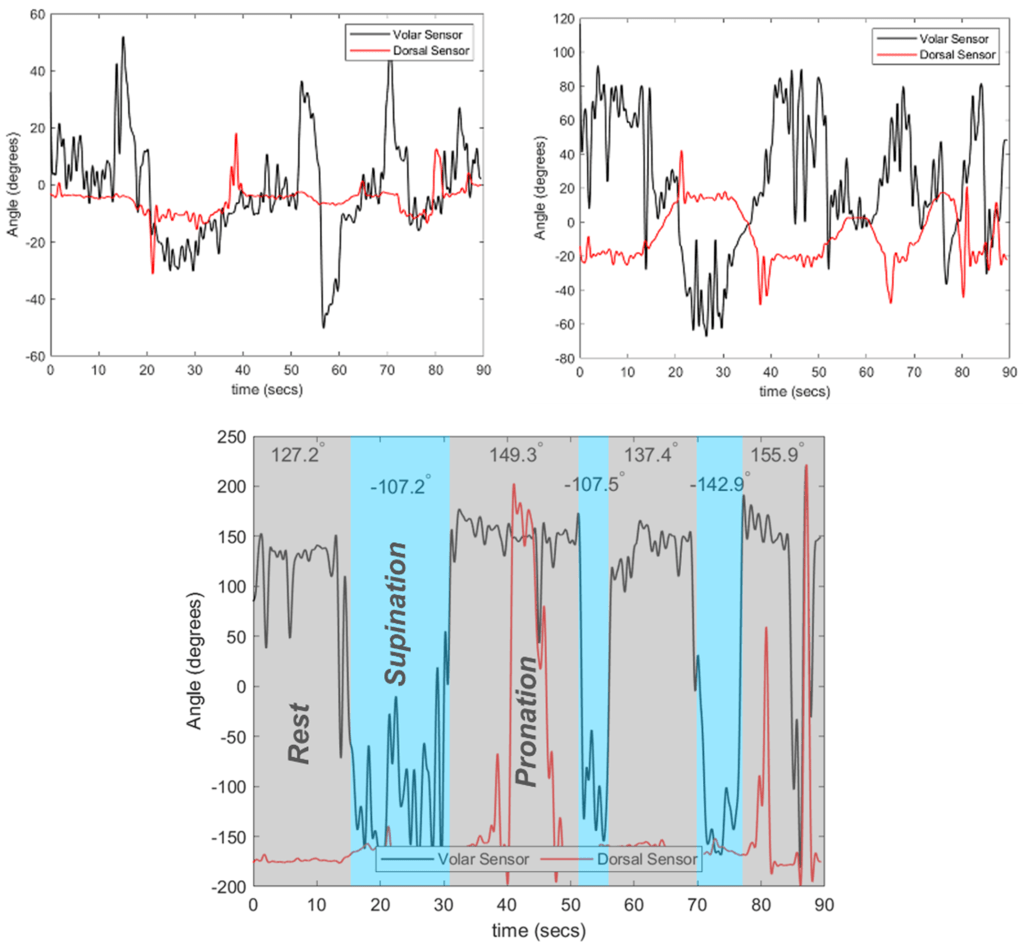
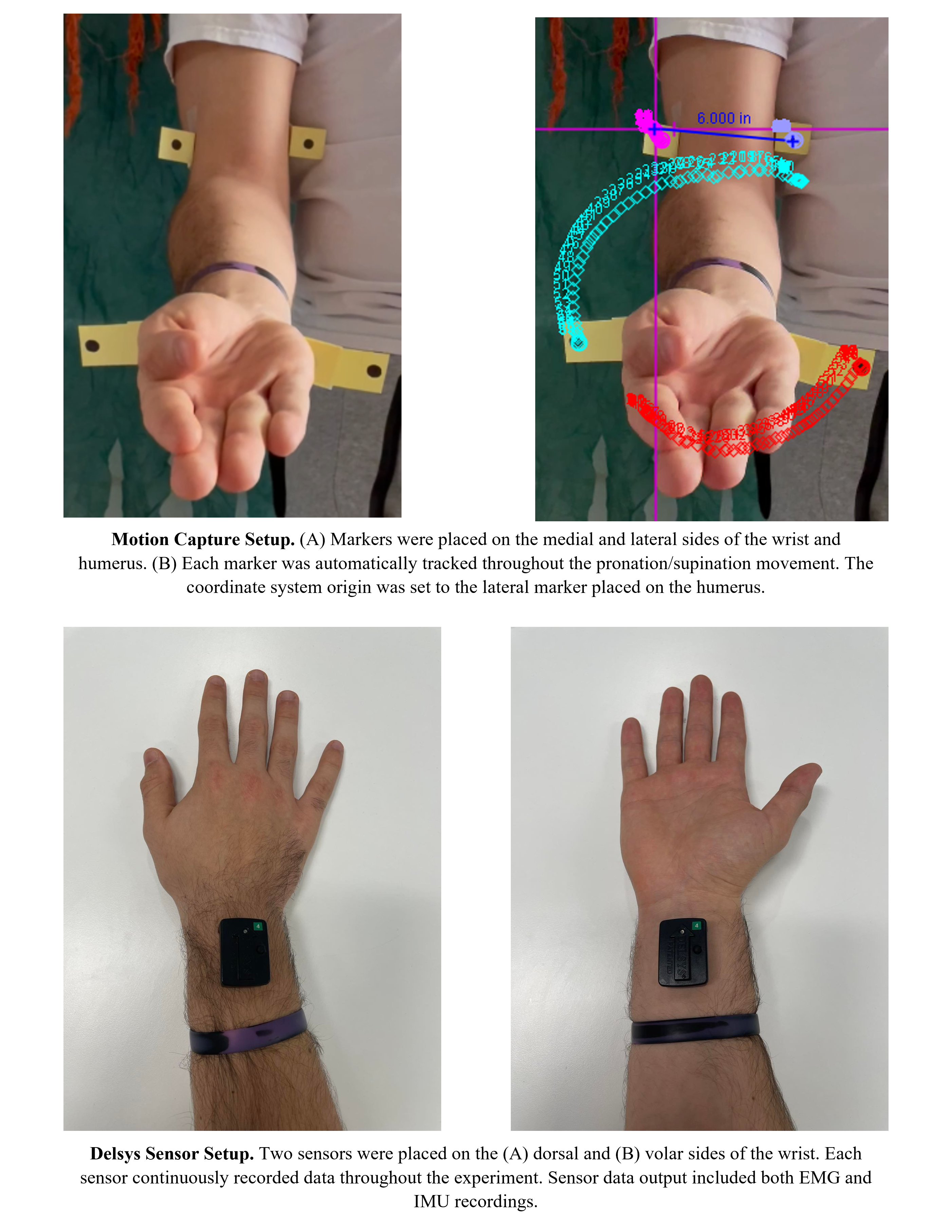
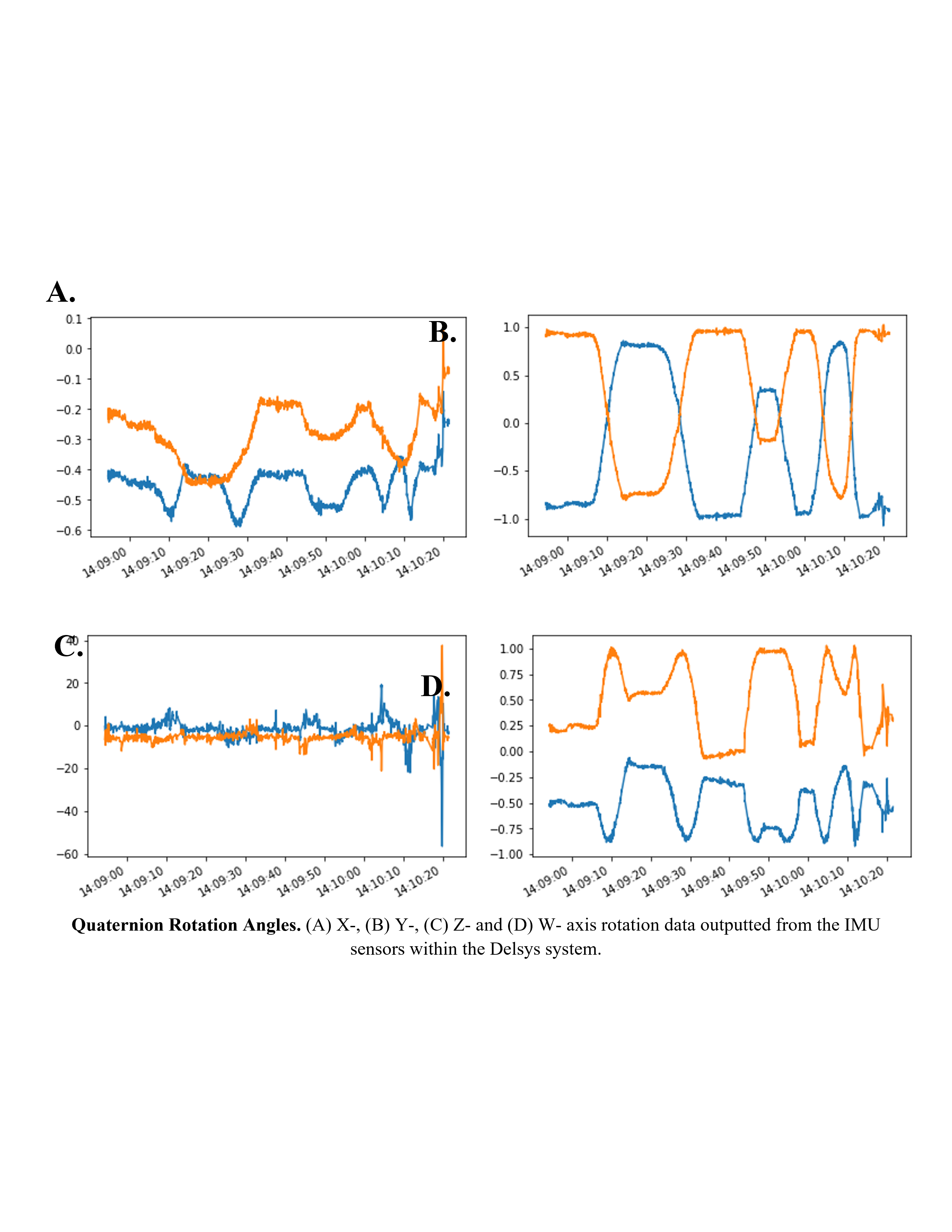
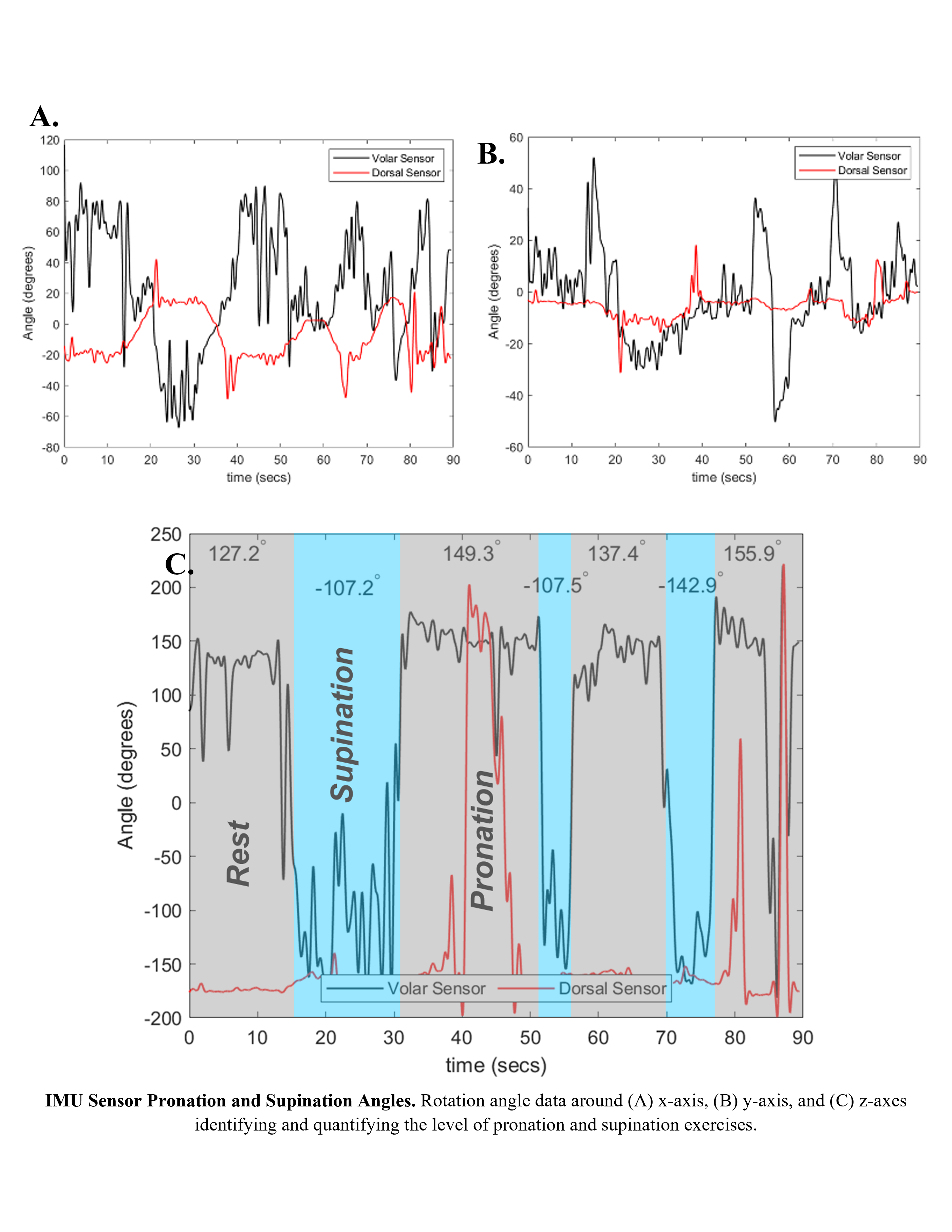
Understanding human movement requires knowledge of how the body moves and how it’s controlled. To understand how the human body moves, this requires knowledge of the body’s biomechanics and musculoskeletal system. The body’s control system, on the other hand, is centered around the nervous system. Neural control is the primary mechanism for making the rest of the body work, locomote, and operate. Through this graduate-level course, I learned the role of the nervous system in human movement and how researchers and clinicians are studying this system in the rehabilitation field to help people who suffer from traumatic brain injuries (TBI), spinal cord injuries (SCI), and strokes to regain functionality of their bodies. The usage of modeling, simulations, sensors, and data analysis were all pivotal skills learned and employed in this project. The project tasked us with using the technical skill gained in this class to probe new areas and answer new questions in the field. I decided to focus my skills in developing a tool to be used in my dissertation work for quantifying the level of forearm pronation/supination for stroke survivors undergoing neurorehabilitation. This project was an individual effort.
University:
University of Illinois at Chicago
Program:
Ph.D. in Biomedical Engineering
Course:
BME 494: Human Movement and Neural Control
Experience Level:
Ph.D. Year 1
Project Duration:
3 Months

Valentino Ivan Wilson
Chicago, IL
 Valentino Ivan Wilson